











Nejnovější
- Poznámky Václava Klause k úvodu semináře o Renaudu Camusovi
- Jiří Weigl: Ohlédnutí za proběhlými volbami
- Odpovědi Václava Klause na otázky Parlamentních listů k neúčasti Petra Pavla u komunálních voleb
- Ivo Strejček: Německým problémem je Německo kancléře Merze
- Jiří Weigl: Deficit rozpočtu – soustřeďme se na výdajovou stranu
Nejčtenější
- Ivo Strejček: Takové obyčejné slovo – válka
- Václav Klaus pour Le Monde vu d'Ailleurs: Le discours presque incroyable de Mme Leyen
- Odpovědi Václava Klause na otázky Parlamentních listů k neúčasti Petra Pavla u komunálních voleb
- Jiří Weigl: Deficit rozpočtu – soustřeďme se na výdajovou stranu
- Ivo Strejček: Německým problémem je Německo kancléře Merze
Hlavní strana » English Pages » Notes for Oxford Union Speech
Notes for Oxford Union Speech
English Pages, 7. 5. 2026
Many thanks for the invitation to the Oxford Union, which brings me to Oxford and to Great Britain after a relatively long time.
I visited Great Britain for the first time shortly after the fall of communism, in 1990, as a newly appointed Minister of Finance of what was still Czechoslovakia to sign the double taxation avoidance treaty with this country. Travelling to Great Britain had been unimaginable in the communist era.
It is almost forgotten that Great Britain under Prime Minister Thatcher and the United States under Ronald Reagan significantly contributed to the end of communism and to the success of the political and economic transformation of the former communist countries.
After getting rid of communism, our ambition was – at least for people like me – clear and straightforward. We had enough of failed experiments. We had no interest in any form of “third ways”. We wanted the first way, we wanted capitalism, parliamentary pluralism and free markets. We wanted ideologically well-defined political parties, not civic movements, not political NGOs. In all of that, Great Britain under Margaret Thatcher was our role model.
That era is over. With all my respect, we no longer see Great Britain as a model now because this country has become a country of progressivism, multiculturalism and genderism. We have not yet reached that stage. The communist experience – and the resulting distrust in government – is still with us. We believe in freedom and free markets, but are more and more frustrated that we no longer find them in the West – neither in Western Europe, nor in America – now.
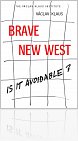
During the communist era, we learned and understood a lot. We also carefully studied the famous dystopias of writers like Orwell and Huxley. We admired their ability to grasp the essence of the problem, but my recently published collection of essays and speeches had – intentionally – a title “Brave New West”, instead of Aldous Huxley’s original “Brave New World”. The West has become a problem now. At least in my eyes and in the eyes of people around me.
I know this is not the topic I was invited to talk about this evening, but I wanted to make my position on these issues explicit, as it fundamentally influences my way of looking at the geopolitical questions of the current era.
Geopolitics is a difficult topic. When discussing it, I am afraid I am moving on an icy surface in slippery dancing shoes. There is no explicit theory behind it, or I have not yet found it. The inevitable consequence is soft reasoning, a lack of rigour and intellectual discipline, plenty of undefined terms, narratives instead of theories, one-sided story-telling, lack of empirical analysis, overuse of apriorisms, normativism instead of empiricism, etc.
Some points and arguments should not be, nevertheless, dismissed or overlooked:
1. When discussing current geopolitical issues, we should avoid falling into the trap of fighting old, long-time non-existent battles. To my great regret this is often the case. It is misleading and counterproductive.
2. Our thinking should not be based on wrong assumptions about the real distribution of political, economic and military powers in the world. I stress – in the world of today.
3. We should not overestimate the significance of institutions and agreements of the past based on deals from an era that no longer exists.
4. We should cease fighting communism, the Soviet Union and Leonid Brezhnev, as it is the case in some places today. Communism is over, the communist ideology which marked the substance of the Cold War no longer has any importance. Yet many arguments concerning present-day Russia are still based on old schemes.
I would like to be well understood. I am the last one to defend communism and the Soviet Union. I spent more than half of my life in the oppressive, non-functioning communist system. After the Soviet Union and Warsaw Pact armies invaded Czechoslovakia in August 1968, I was fired from the Czechoslovak Academy of Sciences as a leading anti-Marxist, anti-socialist, anti-Soviet person. I was also portrayed as a “Chicago boy” because of my frequent references to the ideas of Milton Friedman. Until the end of communism, I was not allowed to travel to the West. In spite of this personal experience, I find it wrong to fight communism now.
I see different dangers. We should carefully study new trends, tendencies, political and ideological stances, theories and ideologies. We should pay attention to ambitions of individual countries as they are now. The old clichés of good guys versus bad guys should be abandoned.
We should pay attention to the changing distribution of power in the world. We are neither in a unipolar nor in a bipolar world now, but are moving towards a multipolar one. The economist in me immediately recalls models of monopolistic, duopolistic and omnipolistic competition and of their characteristics. However, the hypothetical world of perfect competition is not relevant. Similarly, voting in the United Nations with its 193 member states that are very unequal in size has become meaningless.
The shift from unipolarity to multipolarity has always been a very dangerous and unstable moment. We see its impact and consequences both in the Ukraine and Iran wars now. In your invitation letter, you mentioned the post-Cold War order, Ukraine and its attempts to become a NATO member, national sovereignty vs. supranational governance – all of which have been my main worries for a long time.
Instead of a long explanation of my views, let me recall crucial moments from recent history that reveal my basic geopolitical positions:
- I have always been strongly against European centralization and unification, as it contradicts the original idea of European integration as a community of sovereign countries cooperating in a friendly manner. I mention this because it was me who, in 1996, as Prime Minister of the Czech Republic, sent the application letter asking for EU membership. To my great regret, a post-communist country did not have other possibility then;
- at the end of the 1990s, I did not agree with the so called “humanitarian” bombing of former Yugoslavia, as well as the general approach to Yugoslavia throughout the whole decade;
- in 2003, I did not believe that Iraq possessed weapons of mass destruction and said it resolutely – as President of the country – to the U.S. Ambassador in Prague. We decided not to participate in the coalition of the willing, which led to a lot of my problems with the American government after that;
- in 2007, I published a polemics with green ideology in my book “Blue Planet in Green Shackles”, which has been translated into 18 languages;
- when attending the NATO Bucharest summit in 2008, I opposed inviting Ukraine to join NATO;
- in 2009, I was the last head of state to sign the Lisbon Treaty. It reflected my long-lasting disagreement with the attempts at political unification of Europe instead of continuing (and possibly enhancing) friendly cooperation of sovereign European nation-states;
- in 2015, I considered Angela Merkel’s slogan “Wir schaffen das” (we will make it) a tragic mistake, if not an intentional multiculturalist attempt to destroy nation-states in Europe;
- in 2020, I didn’t agree with the excessive anti-covid measures introduced in my country and elsewhere, because they undermined the substance of a free society;
- in 2022, I didn’t approve of the Russian attack on Ukraine, but kept stressing that the war did not start in February 2022, but years earlier when Ukraine’s ambitions were used as a way to weaken Russia;
- and finally, I do not support the ongoing Israeli and American attack on Iran. I don’t believe the problems of the current world can be solved by the escalation of global armament and further wars.
This is a short list of my political stances, which reflect my basic geopolitical views. Most of them would be considered politically incorrect these days, but I am convinced they are correct politically.
Prepared for the Oxford Union, Oxford, May 7, 2026

- hlavní stránka
- životopis
- tisková sdělení
- fotogalerie
- Články a eseje
- Ekonomické texty
- Projevy a vystoupení
- Rozhovory
- Dokumenty
- Co Klaus neřekl
- Excerpta z četby
- Jinýma očima
- Komentáře IVK
- zajímavé odkazy
- English Pages
- Deutsche Seiten
- Pagine Italiane
- Pages Françaises
- Русский Сайт
- Polskie Strony
- kalendář
- knihy
- RSS

Copyright © 2010, Václav Klaus. Všechna práva vyhrazena. Bez předchozího písemného souhlasu není dovoleno další publikování, distribuce nebo tisk materiálů zveřejněných na tomto serveru.